A look at the city’s evolving specialty-coffee scene + 3 unique cafés at the forefront of the movement.
BY TIGGER CHATURABUL
FOR BARISTA MAGAZINE
Featured photo courtesy of Common Grounds
I had no idea what to expect when I booked a flight to Jakarta, Indonesia, for two weeks, intending to spend time shadowing 2024 World Barista Champion Mikael Jasin for a project we were working on together. During that time, I not only got to know him extremely well (the hours in traffic are great for bonding), but I also got to experience much of the city through Mikael’s eyes.
Jakarta was home to Indonesia’s first World of Coffee (WoC) event last May, which also happened to be the first WoC trade show in a producing country—a reflection of how far Indonesia’s specialty-coffee industry has come over the past decade. Today, we’ll explore the history of coffee production in Jakarta and highlight three standout shops at the forefront of the city’s specialty-coffee movement.
From colonial coffee trade to leading coffee hub
Most people picture Jakarta as a bustling city with heavy traffic, tropical weather, and a dense, diverse population. But for coffee people, it’s also a major hub between Sumatra and Java, and a historic gateway to the global coffee trade.
For over 300 years, from 1619 to 1949, Dutch colonists renamed the city “Batavia” and designated it as the capital of the Dutch East Indies. Via this bustling Southeast Asian port, the Dutch East India Company (VOC) exported a variety of cash crops like coffee, grown under the enforced Cultivation System. The Netherlands reaped enormous wealth from this agricultural policy at the cost of famine and epidemics that spread throughout the Javanese population.
Now, 400 years later, Indonesia has transformed its coffee industry and made enormous leaps to achieve world-class status in a highly competitive international market. Jakarta is teeming with coffee shops for every kind of consumer, from those grabbing a quick street vendor drink to discerning connoisseurs seeking the latest beverage innovations.
Climbing the ranks
When Daryanto Witarsa co-founded Common Grounds in 2014, the demand for coffee in Indonesia was just starting to take off. According to the USDA, there were fewer than 200 Starbucks stores in the country, and domestic consumption was around 2.7 million 60-kilogram bags annually.
Common Grounds celebrated its 10th anniversary in 2024, and those numbers have grown to 581 Starbucks stores and over 900 outlets for Kopi Kenangan, a local chain that entered the market in 2017. In 2025, Indonesia is forecasted to consume 4.8 million bags of coffee domestically. That’s over 126,000 tons more than in 2014.
Of course, not all of it is specialty coffee. But the recent rise in popularity of slow bars and manual brewing reflects the growing interest in something more than the traditional kopi susu (milk coffee) or iced latte.
“When I became president of the Specialty Coffee Association of Indonesia in 2021, I had three missions: 1) Indonesia needed to win the World Barista Championship; 2) host World of Coffee; and 3) run the Cup of Excellence,” says Daryanto. And in just three short years, all of that has happened and more.

Indonesia boasts not one but two world championship winners—2023 World Coffee Roasting Champion Taufan Mokoginta and 2024 World Barista Champion Mikael Jasin—and its entrants in other World Coffee Championships competitions are no strangers to the finals.
The first Indonesian Cup of Excellence was held in 2021, and following Indonesia’s first World of Coffee event last year, the future looks bright for Indonesia’s coffee supply chain. “What’s next? I want to see my baristas grow so that they can help people,” says Daryanto. “Then they will make an impact on others and the community will rise up and set the standard.” The bar is already set very high in Indonesia, and with so many achievements already in hand, it’s only going to continue to soar.
While there are many coffee shops in Jakarta worth visiting, here are three must-see cafés I visited on my trip.
Common Grounds Terra

A double-shot iced black with the Major Tom blend of Colombia Aji Bourbon and Indonesia Aceh Pantan Musara was my daily wake-up while I was in Jakarta. For lunch, the bebek goreng cabe ijo, crispy duck leg on cassava leaf and kaffir lime rice, is a bestseller. But if you’re vegetarian, the mushroom rendangon the same rice mixture is a delicious plant-based way to experience Indonesian flavors. While every Common Grounds café shares the same base menu, some locations offer exclusive specials or even serve cocktails.
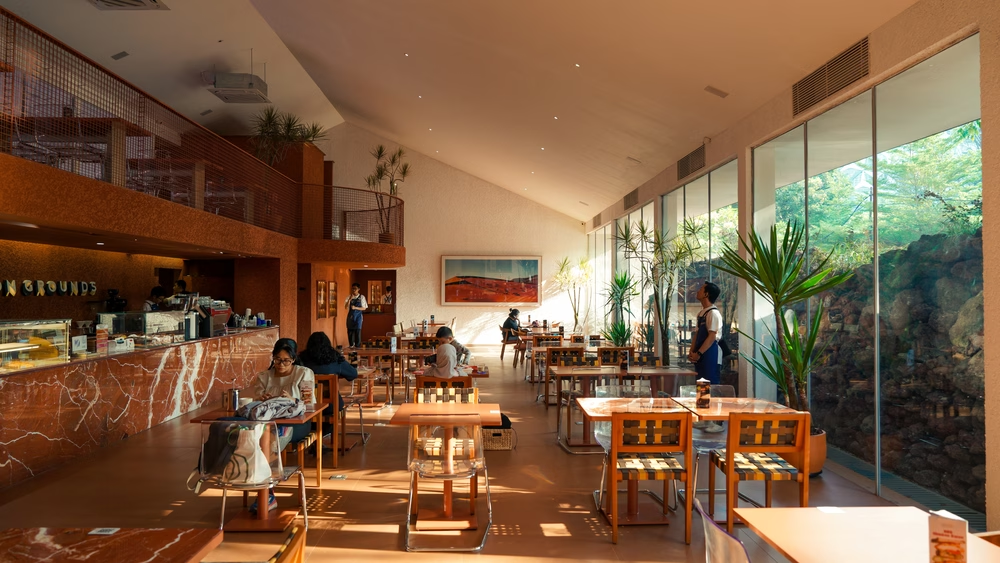
The newest Common Grounds outlet is also a tennis club and houses a fully equipped tennis court attached to the café. The secluded oasis, cloaked in sporty aesthetics and warm terracotta tones, is nestled among ancient antique shops that dot one of Jakarta’s many little canals.

Not only can you book a two-hour tennis session at this Common Grounds location, but you can also enjoy an omakase coffee experience upstairs in the Trophy Room, where all the awards won by Common Grounds team members shine on display. The coffee menu is different in the Trophy Room, and you can choose from some of the most exclusive beans in the world.
Omakafé

Although Omakafé is outside of Jakarta in BSD City, Mikael’s omakase-style coffee bar is worth the trip. The coffee menu at Omakafé is essentially molecular gastronomy, bringing innovations often seen on the WBC stage to the consumer. It’s very far removed from the average specialty café or slow bar, and seeing so much effort being put into research and development was exciting.
Georgius Audrey Teja—Odi to most people—started working with Mikael under the official professional title of “Anything Coffee Related.” Over time, he found himself gravitating toward recipe creation and experimentation, which is how he became the R&D specialist when Omakafé opened in 2023.
“Miki always sent me to good restaurants and bars so I could learn something from them,” says Odi, referring to his boss by his widely used nickname. “I collect a lot of data, including their techniques, how they prepare ingredients, how things are eaten, and how they achieve certain flavors. I also do a lot of online research before I try anything in our kitchen.” This isn’t a standard kitchen, by the way. The countertops are occupied by a centrifuge machine, a lab-grade distiller, Thermomixes, a dehydrator, and other intriguing items.

The seasonal menu features coffee, matcha, and cacao-focused degustation sets, each with three drinks: one showcasing the pure ingredient “As Is,” one with Mikael’s WBC-winning “M*lk/Mix,” and one creatively “Reimagined.” I tried the Indonesian coffee and Gesha sets, which included unique drinks like a “Soda Charged Clarified Iced Latte,” a distilled “Coffee Hydrosol,” and a warm “Arroz Con Leche.”
I could barely wrap my head around drinking a clarified “iced latte” that was fizzy and translucent, or sipping on a hydrosol that looked like plain water but had all the aromas of an espresso separated from the solids. The experience was mind-blowing and challenged the ceiling of how high we can elevate coffee for the consumer.
Tanatap Coffee—Matraman

For a getaway from Jakarta’s metropolitan chaos, you can find refuge in the hidden gardens of Tanatap’s cafés. The upper level of their Matraman location is incredible. It would be a disservice to simply call it a terrace, because the integration of urban architecture and living design transforms the space into seamless experience of tropical creativity.
Tanatap’s co-founder, Tika Dwi Putri, calls the café a coffee garden instead of a coffee shop, and the immersion into the lush greenery feels like you’re getting lost in the mountains of Indonesia. All it needs
is a few coffee trees.
I enjoyed their iga bakar garang asem, braised ribs in soup with sambal and rice, with an iced latte made with roasted cashew milk, right next to a mini jungle growing out of the center of the café. As I worked on my laptop, I occasionally felt like I was sitting outdoors—until the cool, air-conditioned climate reminded me how fortunate I was to enjoy nature from the comfort of the city.
Unity in diversity
Jakarta’s vibrant coffee culture, rich history, and warm hospitality make it an unforgettable destination, and I’m grateful to have experienced it alongside Mikael, his wife, Yessylia, and the So So Good team. I could easily write another “Field Report” just on the incredible food they introduced me to, but that might belong in a different magazine!
Editor’s note: This is a condensed version of the original article, which appeared in the April + May 2025 print issue ofBarista Magazine. Click here to read the full piece.
ABOUT THE AUTHOR
Tigger Chaturabul (she/her) tried to be a barista for two years until she realized she was better suited behind the business than behind the bar. She now runs her own copywriting and design studio, Curious Typhoon Studio, that serves F&B and other small businesses in Hong Kong. Her free-range creative lifestyle allows her to spend all her time in coffee shops everywhere.

Subscribe and More!
As always, you can read Barista Magazine in paper by subscribing or ordering an issue.
Support Barista Magazine with a Membership.
Signup for our weekly newsletter.
Read the February + March 2026 Issue for free with our digital edition.
For free access to more than five years’ worth of issues, visit our digital edition archiveshere.
The post The Vibrant Coffeehouses of Jakarta, Indonesia appeared first on Barista Magazine Online.