Key takeaways
- Middle Eastern coffee culture is one of the oldest and most influential in the world.
- Over 60% of Saudi Arabia’s population alone is under 30, driving the region’s specialty coffee consumption.
- Some cafés operate 24 hours a day, reshaping global coffee habits as younger people drink less alcohol.
- Middle Eastern flavours, café design, and hospitality influence coffee culture worldwide.
Middle Eastern coffee culture is among the oldest in the world. Historical records suggest that Yemeni Sufis were among the first outside Africa to drink coffee in religious ceremonies during the Middle Ages. Both Arabic and Turkish coffee traditions are also listed as Intangible Cultural Heritage by UNESCO, protecting and preserving important historic coffee practices.
“Coffee has been deeply rooted in the Arabian Peninsula for centuries, and in the region that is now the United Arab Emirates, it has long been central to Bedouin hospitality, majlis traditions, and social exchange,” explains Ibrahim Al Mallouhi, the founder of The Espresso Lab in the UAE. “In this part of the world, coffee has never been just about flavour. It’s a symbol of generosity, respect, and connection.”
The Middle East’s extensive influence on global coffee consumption, therefore, comes as no surprise. But in more recent years, as the region’s specialty coffee sector has grown exponentially, its international sway has emerged in new ways.
Viral pistachio and Dubai chocolate lattes, two flavour trends that have deep connections to Middle Eastern cuisine, are perhaps the most obvious examples. The Wall Street Journal even dubbed Dubai chocolate (a milk chocolate bar filled with a mix of pistachio cream, tahini paste, and crunchy shredded kataif pastry) as the “next pumpkin spice”. Sales have soared as pistachio-themed drinks have become fixtures in cafés and online DIY coffee recipes worldwide.
However, the Middle East’s modern influence on global coffee culture extends beyond menus. It’s also reshaping late-night coffee consumption, café design, and hospitality.
You may also likeour article on Saudi Arabia’s booming specialty coffee market.

Younger generations in the Middle East are driving new global trends
For many people around the world, coffee is a beverage predominantly consumed in the morning and, at the latest, the early afternoon. Cold brew is perhaps the exception; more people report drinking it in the afternoon in place of alcoholic beverages and sodas.
But in the Middle East, where alcohol consumption is restricted or prohibited, coffee is an all-day drink.
This coffee drinking culture has existed in the region for centuries. But in countries such as Saudi Arabia, where specialty coffee consumption is rapidly increasing, modern coffee shops have become new social hubs, particularly for younger people.
More cafés in larger cities like Riyadh, Jeddah, and Buraydah are extending their opening hours, with some even open 24 hours a day. Gender-segregated coffee shops are also becoming less common, creating more progressive social spaces.
Younger demographics are driving much of the growth of the specialty coffee market in the Middle East. Over 60% of the population in Saudi Arabia alone is under 30, and they are seeking “third places” that blend functionality with an atmosphere for socialising, studying, and working throughout the day.
“It’s not the replacement of ritual, but an evolution of how heritage informs innovation,” Ibrahim says. “This allows specialty coffee in the UAE and the wider Middle East to grow with authenticity and cultural relevance, rather than in opposition to the values that have shaped our coffee culture for generations.”
As late-night coffee culture grows in the Middle East, it’s influencing cafés worldwide. Some cities like Seoul in South Korea already have a well-established all-hours café working culture (or Cagongjok), but more coffee shops in Western markets, notably in the US and UK, are also extending their opening hours.
Brands like EL&N, London-born but also with a growing presence in the Middle East, open some stores until midnight. The growing number of Yemeni-style cafés in North America, including Qahwah House, Haraz, and MOKAFÉ, also open until late. These spaces are meeting demand for alcohol-free venues, particularly among expanding Muslim populations and younger consumers who are embracing sober socialising.
Café design is changing
Beyond menus and opening hours, the Middle East is also influencing coffee shop design worldwide.
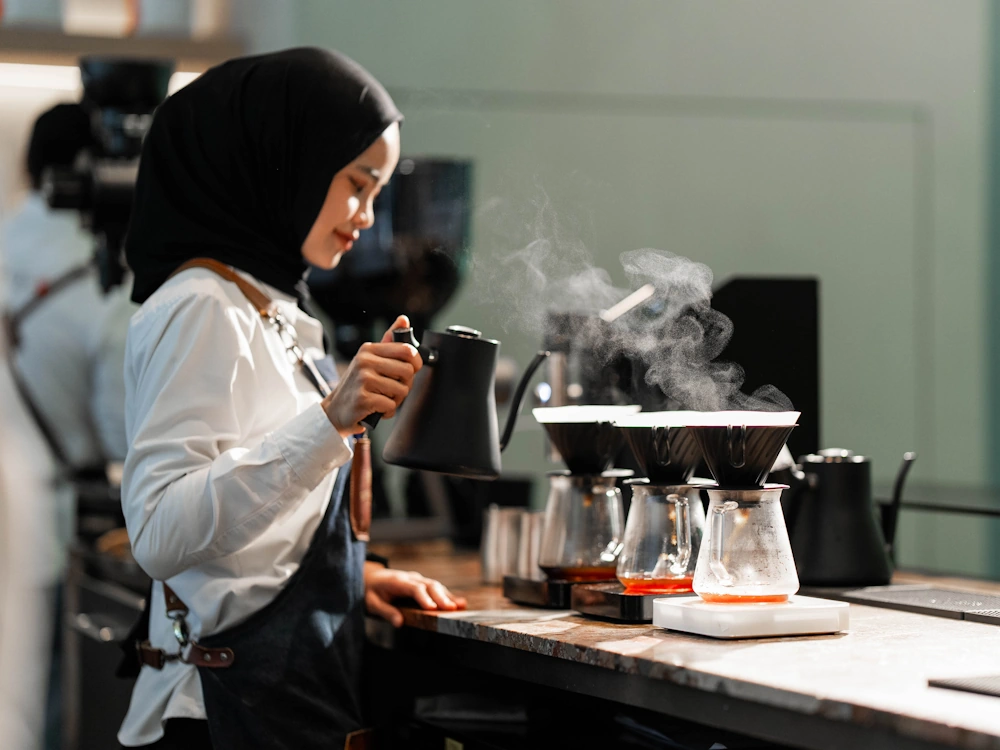
In recent years, the region’s cafés have become increasingly modern. Striking minimalist interiors, bright colour schemes, and comfortable seating invite customers to stay longer – reinforcing the significance of the “third place” in Arabic coffee culture.
But design elements that honour heritage still remain. Premium Middle Eastern café chains like Half Million and Barn’s, as well specialty brands like Hoof and Camel Step, have opened stores that embrace both modernity and tradition. They incorporate locally sourced, natural materials and small design details that acknowledge their Middle Eastern roots, while still creating spaces that could fit seamlessly into any major city in the world.
Visual appeal is often the focus of modern Middle Eastern coffee shop design. In an era when social media exposure can determine success, cafés worldwide are mimicking Middle Eastern design elements, attracting younger audiences to share photos of their spaces online.

New opportunities for specialty coffee
For specialty coffee roasters and café owners around the world, the intersection with Middle Eastern influences presents both opportunity and challenge. Engaging with these traditions can help businesses reach new audiences and stand out, but doing so requires more than simply following trends.
High-quality ingredients are a starting point. Rather than treating Middle Eastern flavours as novelties, cafés are increasingly expected to source pistachios, dates, and spices with the same care applied to coffee.
“Ingredients such as cardamom, dates, rose, clove, and sidr honey will find their place on menus not as novelties, but as thoughtful flavour accents that elevate and complement coffee,” Ibrahim says.
Menu innovation, Ibrahim adds, should be genuine rather than imitative. A pistachio latte, for example, can highlight both the ingredient and the coffee, rather than relying on low-quality ingredients to drive interest.
Middle Eastern café design and service philosophy also offer global specialty coffee shops the opportunity to reinforce their focus on customer service.
“Coffee house concepts inspired by majlis culture – centred on ritual, hospitality, and a slower, more intentional pace – will resonate with people seeking more than convenience,” Ibrahim suggests. This is also reflected in Japan’s omakase dining culture, which is becoming more prevalent in specialty coffee shops around the world.
For many, the appeal lies in what Arabic coffee culture represents rather than what it serves. “It’s the ritual itself,” Ibrahim explains. “It slows the pace, brings people together, and creates space for presence, conversation, and shared experience. At times, coffee is the conversation anchor for storytelling, reflection, and connection.”
This emphasis on hospitality and intentionality offers a counterpoint to the convenience-driven model that often dominates Western coffee consumption. For some specialty cafés, it’s an opportunity to refocus on attentive, detail-oriented hospitality.

As global specialty coffee culture continues to evolve, the Middle East’s contributions – rooted in both tradition and modernity – will remain a defining force. Approached with care, these influences can enrich café culture while also supporting cultural exchange.
“Authenticity comes from intent, depth, and responsibility, not from surface-level adoption,” Ibrahim concludes. “Incorporating Middle Eastern influences should begin with a genuine understanding of the cultural weight behind coffee and its role in hospitality, ritual, and community.”
Enjoyed this? Then readour article on how coffee shops can tap into food trends.
Photo credits: The Espresso Lab
Perfect Daily Grind
Want to read more articles like this?Sign up for our newsletter!
The post How the Middle East built its global influence on coffee appeared first on Perfect Daily Grind.